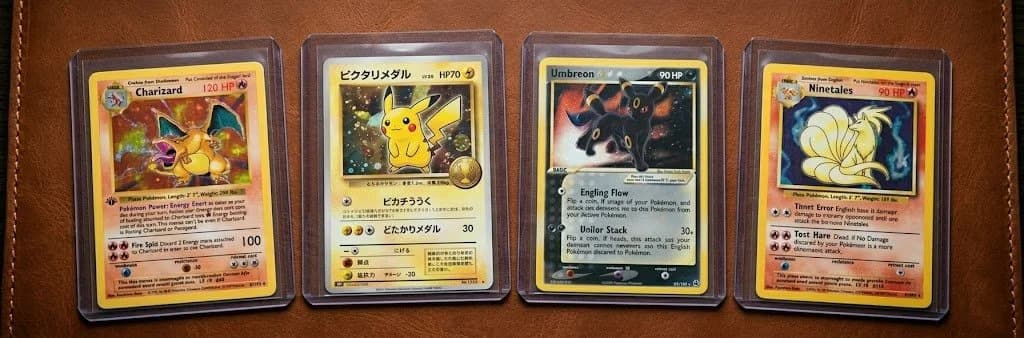
At some point most collectors reach the same crossroads. A collection has grown too large, duplicate pulls have stacked up, or the hobby has simply moved on. Whatever the reason, selling Pokémon cards in the UK is not as straightforward as listing a few items and waiting for the money to arrive. Where you sell, how you present cards, and whether you know their actual value before you start all have a significant effect on what you walk away with.
This guide covers the main selling options available to UK collectors, what to expect from each, and how to avoid the most common mistakes.
Know What You Have Before You Sell Anything
This sounds obvious but most collectors who undersell their cards do so because they did not accurately value them beforehand. A card you think is worth £5 might be worth £40 if you have the Special Illustration Rare variant rather than the standard print. A card you think is worth £80 might have dropped to £30 since a reprint was announced.
Before listing a single card, catalogue your collection and pull live GBP market prices. SnapSlab does this automatically — scan the card, and the AI identifies the set, variant, and current UK market value. For a collection of any size this takes considerably less time than manual research, and it means you are not pricing blind when buyers start making offers.
It also protects you against one of the most common situations sellers find themselves in — accepting a bulk offer from a shop or a dealer without knowing whether it represents fair value. A buyer who knows your cards better than you do will always have the advantage in that negotiation.
Value your collection before you negotiate
Scan any card and get a live GBP market price in seconds. Free to start.
Start scanning freeWhere to Sell
Each selling channel involves a different trade-off between price achieved, time required, and effort involved. The right choice depends on the value of your cards and how quickly you need the money.
eBay
Largest UK buyer pool · Auction or fixed price · Fees ~12.8%
eBay remains the most widely used platform for selling individual Pokémon cards in the UK. It has the largest buyer pool, supports auction and fixed-price formats, and buyers are accustomed to paying close to market value for cards in good condition. Price from recently sold listings rather than active listings — what sellers are asking and what buyers are paying are often different figures. Fees currently run around 12.8 percent of the final sale price for most private sellers in the trading card category, which makes individual listings on low-value cards uneconomical.
Facebook Marketplace and TCG groups
No platform fees · Smaller buyer pool · Direct negotiation
Facebook has a large and active Pokémon card trading community in the UK, operating through both Marketplace and dedicated buying and selling groups. The absence of platform fees means more of the sale price goes to you. The trade-off is a smaller buyer pool and a more manual process — you are negotiating directly with individuals. Be clear about condition in your listings and photograph cards honestly. Disputes over condition are the most common source of friction in private sales.
Local card shops
Instant cash or store credit · Typically 40–60% of market value
Selling to a local card shop is the fastest option and the one that will return the least money. Shops buy below market value to make a margin when they resell — offers typically come in at 40 to 60 percent of current market value, sometimes less on slower-moving cards. Store credit is usually offered at a better rate than cash. Knowing your cards' market values before you walk in matters here more than anywhere else. A shop buyer who senses you do not know what you have will price their offer accordingly.
Trade nights and local leagues
Peer-to-peer · No fees · Closer to market value in trades
If you attend local league nights or trade events, peer-to-peer trading can move cards at closer to market value while acquiring cards you actually want in return. This works particularly well for mid-range cards that are not worth the effort of individual eBay listings but are too good to bulk out at shop prices. Being able to show a trading partner your SnapSlab library — what you have, what condition it is in, what it is currently worth — removes the guesswork from negotiations and builds credibility with serious trading partners.
Grading Before Selling: When It Is Worth It
Professional grading services such as PSA and CGC assess a card's condition, seal it in a tamper-evident case, and assign a numeric grade. A PSA 10 of a desirable card is worth significantly more than an ungraded copy of the same card in equivalent condition.
Whether grading before selling makes financial sense depends on the card's value and the realistic grade it is likely to achieve. Grading has costs — submission fees, postage, and turnaround time that can run to several months depending on the service tier you choose. On a card worth £20, grading rarely makes sense. On a card worth £200 or more in Near Mint condition, the premium a PSA 9 or PSA 10 commands can justify the cost and wait.
Be realistic about the grade your card is likely to receive. PSA 10 requires near-perfect surfaces, corners, edges, and centring. Cards you consider Near Mint often come back as PSA 8 or PSA 9 once assessed under professional conditions. Submitting a card expecting a 10 and receiving an 8 can leave you with a graded copy worth less than the ungraded market price once submission costs are factored in.
Bulk vs Card by Card
The decision between selling your collection as a bulk lot and selling individual cards is essentially a trade-off between time and money. Selling card by card, particularly on eBay, will return significantly more in total but requires considerably more effort — photographing, listing, packaging, and posting individual cards.
Bulk sales to shops or dealers are fast but will not return anywhere near individual card values. A middle path that many collectors use is to pull the highest-value cards for individual sale, then bulk out the remainder to a shop or through a Facebook lot listing. This captures most of the collection's value without requiring you to list several hundred low-value cards individually.
Whichever approach you take, knowing which cards in your collection are worth individual attention and which are bulk material requires an accurate valuation first. A collection library with current GBP prices, sorted by value, makes that decision straightforward.